

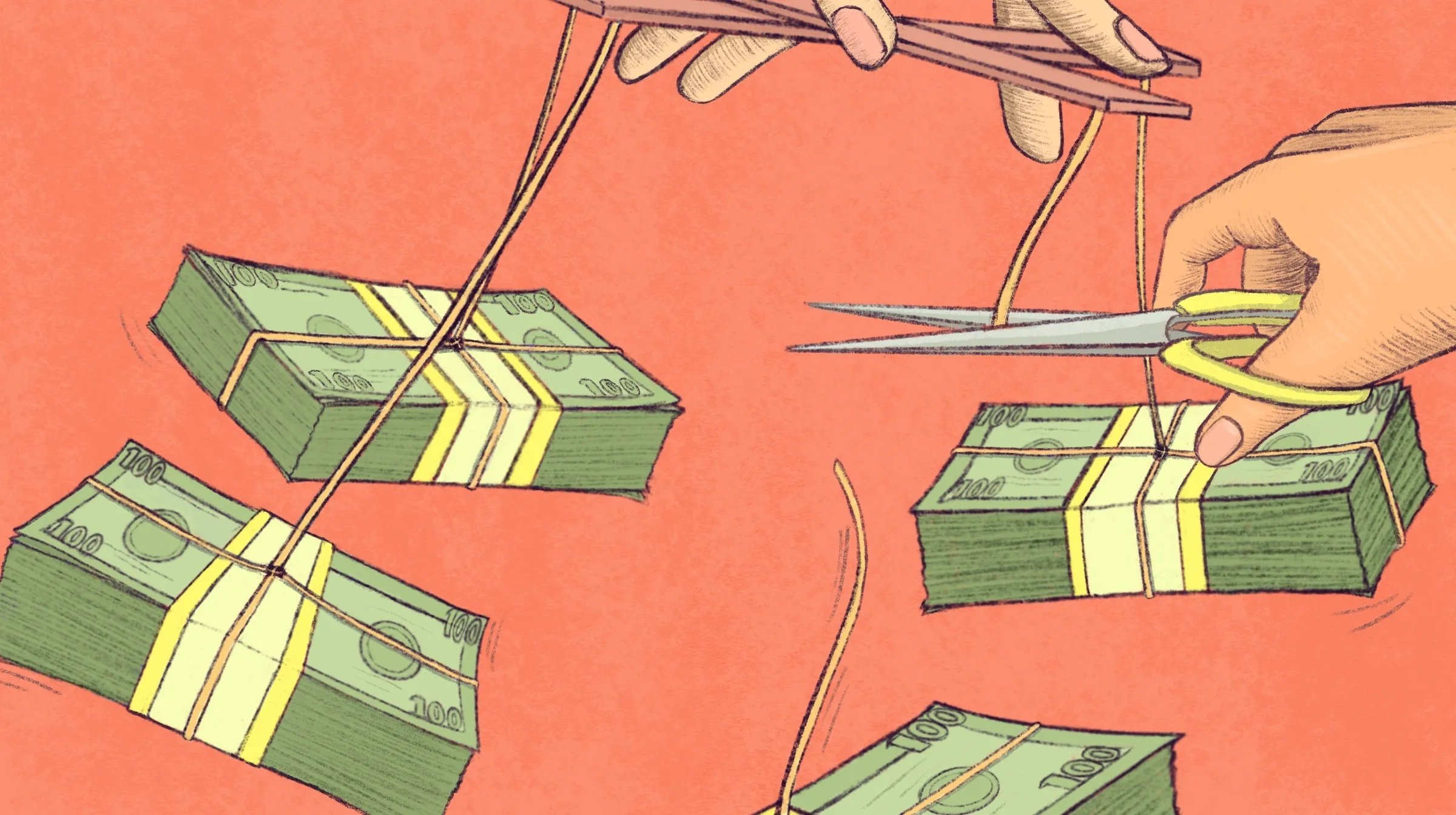
The end of the year is approaching, and big-hearted citizens are looking for ways to make our world a little kinder. Animal protection is one such social justice movement in urgent need of funding and new philanthropic approaches. The amount of philanthropic giving that goes to address the systemic exploitation and suffering of 80 billion farmed animals, killed each year in our global food system, is estimated at a minuscule $200–220 million USD year.
Ending animal violence and exploitation, and building ethical, sustainable food systems, is a complex, dynamic, and entangled process. It requires a systemic reimagining of thousands of years of traditional Western philosophy, as well as our anti-animal cultural, economic, and political institutions, values, and behaviours. Change at this scale relies on the initiative, grit, creativity, and moral imagination of real individuals. Advocates who often dedicate their entire lives to this marginalised, thankless cause. Who believe it their calling. Will stop at nothing.
After twenty years in the animal protection movement, I know many people just like this. And they are worth our investment. And I believe that trust-based philanthropy is how we will get money flowing to them appropriately.
Trust-based philanthropy and effective altruism
Trust-based philanthropy, or TBP, is gaining traction in the animal protection movement, yet much of the conversation still revolves around Effective Altruism (also known as EA).
These frameworks differ in meaningful ways, especially for struggling animal advocates. EA maximises quantifiable impact, steering capital to where empirical data demonstrates the greatest expected value. For animals, this has often meant concentrating funding on the interventions most likely to yield measurable welfare gains, such as corporate cage-free commitments or on-farm welfare improvements. Using these algorithmic models and meta-analyses to guide decisions in the animal protection movement has led to significant gaps in funding.
Animal advocates must be seen as partners. They often make immense sacrifices, financial, emotional and personal, to devote themselves to this challenging and often traumatic movement. Supporting their efforts not only with funding but also with networks, mentoring, peer support, and capacity development is an investment in their potential, vision, and capacity. It can mean that they stay in the movement long term, feeling supported and appreciated. Funding these passionate and driven people will build our still fledgling animal protection movement and plant-based industries.
A TBP approach allows for local expertise and regional knowledge, as well as long-term partnerships. It reduces administrative burdens and enables animal advocates to focus on innovation to address evolving challenges. In the animal protection movement, these kinds of projects could look like accelerators to help budding animal advocates develop organisations across Africa, or network-building events to connect undercover animal investigators across India.
For example, in Bhutan, Sri Lanka, and India, TBP organisation, Thrive Philanthropy supports local vegan organisers at VegVoyages to lead mass culinary training and educational events, introducing plant-based meals into the tourism and hospitality sectors. These grassroots efforts help popularise plant-based eating and, with strong early adoption in hotel schools and food service, replace hundreds of thousands of animal-based dishes with sustainable plant-based alternatives each year.
“Contemporary Issues in Animal Rights Law,” an online course developed by ICARE (International Centre for Animal Rights and Ethics), may be another project overlooked by an EA approach. Funded by TBP nonprofit, Voiceless, the course provides legal training for emerging animal lawyers worldwide, offers scholarships to applicants from the Global South, and expands access and builds a global network for animal law. It may not yet produce easily measurable data points, but it is an effective and essential avenue for building the animal law movement. Law reform is absolutely key to ending exploitation and allowing for animal flourishing.
Trust is not naive
For many TBP philanthropists, including Thrive and Voiceless, trust isn’t naïve. Quite the opposite. Organisational processes are rigorous, incorporating due diligence, deep conversations with applicants, local vetting, external advisors, and accountability measures, all carefully woven together.
Trust-based philanthropy has many other benefits for the animal movement, including more equitable relationships between donors and animal groups, allowing advocates to exercise their expertise and respond to emergent needs. It minimises time-consuming bureaucracy, freeing up advocates and activists to do what they do best. In some cases, this may be rescuing newborn male calves discarded by the dairy industry, who will become ambassadors in a sanctuary’s humane education programme, allowing visitors to reimagine our relationship with farmed animals. Or planting community gardens, together with school children, to learn and experience the importance of plant-based nutrition.
The more that we adopt trust-based philanthropy in the animal movement, the more we can allow advocates to lead, experiment, and address the root causes of animal exploitation. We support their unquantifiable work essential for systemic change, like network building and piloting out-of-the-box strategies.
Animals are desperate for our help and the humans who are dedicated to their welfare are not algorithms. Their lived, embodied experiences, acquired after decades in the movement, are not necessarily quantifiable. If our goal is compassionate change for animals, then we must judge success not solely by spreadsheets, but by the individuals, communities, creativity, and breakthroughs made possible through trust.
Ondine Sherman sits on the Board of Directors of Thrive Philanthropy and is the Co-founder and Managing Director of Voiceless, the animal protection institute.


%20(7).png)




.webp)

.webp)
%20(1280%20x%20720%20px)%20(41)%202.webp)
%20(1280%20x%20720%20px)%20(38).webp)
%20(1280%20x%20720%20px)%20(31).png)


%20(1280%20x%20720%20px).webp)


.webp)


.webp)
.gif)

.webp)


.gif)