
This story is part of a series supported through a partnership with Global Fund For Children.
A recent publication by NEAR marks an important milestone in one of philanthropy’s most urgent conversations: how to move resources directly to communities.
NEAR, or the Network of Empowered Aid Response, is a movement of civil society organisations from the Global South that has been fighting to transform aid long before the upheavals of the past year. Their new mapping of locally-led pooled funds reaches a conclusion that many of us in the Global South have long understood: the institutions capable of financing frontline solutions already exist. The challenge is no longer to design new mechanisms. It is to resource the ones that are already working—and to do so over decades, not funding cycles.
Reading the report, I was encouraged. I also found myself adding a comment beneath the publication. The mapping identified 63 Global South funds. Within minutes, simply from memory, I identified another 35 funds across Latin America, Africa and Asia that were not included. Most belong to the very networks many of us have spent years building together.
This is not a criticism of the report. If anything, it demonstrates its central point. The financing infrastructure that has quietly emerged across the Global South remains more visible to those who built it than to the global financial system that increasingly depends on it.
That reality became especially clear during a recent gathering of Global South funds at London Climate Action Week. Leaders from the Socio-Environmental Funds of the Global South, Rede Comuá, and the Amazon Network of Community Funds – comprised of Indigenous, Afro-descendant, women’s and community funds – came together with governments, philanthropy leaders and financial institutions to discuss: how can we resource community-led climate solutions?
What struck me was not the diversity of institutions around the table, but the remarkable convergence of their experience. The climate finance challenge is not primarily about a shortage of capital. Nor is it about a shortage of local solutions. It is about where capital flows, who controls it, and who is considered trustworthy enough to manage it.
This is where I believe the international conversation continues to misdiagnose the problem. Two assumptions still shape much of climate and biodiversity finance. The first is that Global South institutions are not yet prepared to manage large-scale financial resources. The second is that local communities themselves cannot responsibly manage direct investment.
Yet the evidence increasingly points in the opposite direction. Around the world, communities with secure rights, trusted local institutions and sustained investment consistently protect forests more effectively, strengthen biodiversity, improve livelihoods and reinforce territorial governance. The challenge is not finding capable communities. It is building financing systems capable of reaching them efficiently.
Our experience at Casa Fund illustrates this point. Through the Sociobiodivesity Web program, we designed and managed a financing initiative exceeding US$10 million to support community enterprises across every Brazilian biome. Nearly 4,000 proposals were received. More than 2,700 underwent technical assessment. 405 community organizations were selected through rigorous governance, financial management and compliance systems. This, combined with all other Casa Fund programs, will add to more than 820 grants by the end of 2026 alone.
The lesson is not that Casa Fund is exceptional. The lesson is that this capacity already exists across the Global South. For decades, locally rooted funds have quietly built sophisticated systems for governance, grantmaking, risk management, accountability and territorial accompaniment. They understand local realities because they belong to them. They can reach communities that conventional funding systems rarely see, while maintaining the standards expected by major institutional donors.
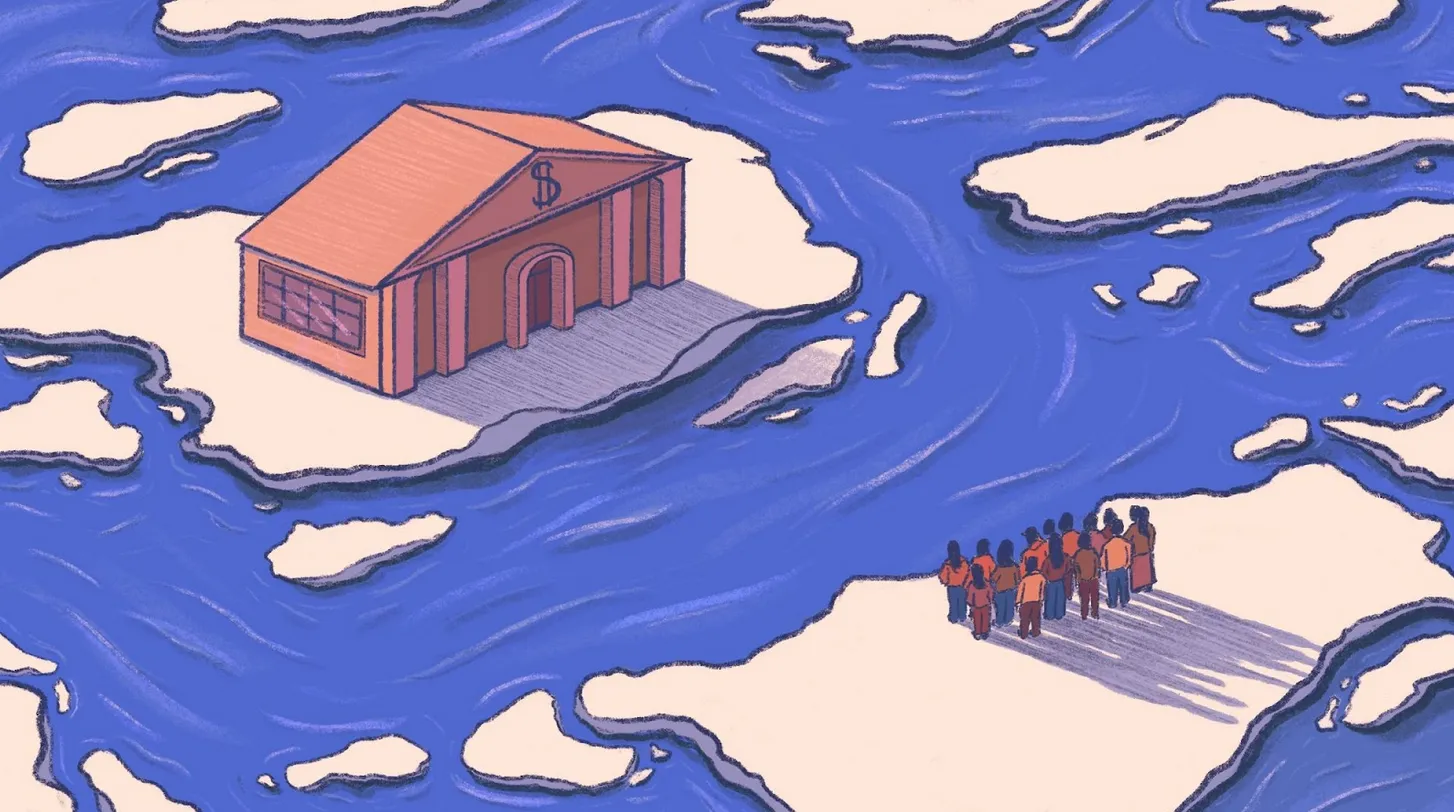
What remains scarce is not capacity, it is recognition. As I have written before, funders in the Global North continue to see us as intermediaries – a term that they invented – instead of the infrastructure that we are. Because the system assumes capacity is missing, it continues searching for new mechanisms instead of investing in those already operating. It creates longer delivery chains, higher transaction costs and greater distance between financial decisions and the territories where climate action actually happens.
Ironically, the effort to reduce risk often produces greater inefficiency. This is why Global South funds deserve to be understood differently. They are not simply grantmakers or intermediaries. They are democratic infrastructure. They transform financial capital into community power, territorial governance and long-term stewardship of the world’s most important climate-regulating ecosystems. They reduce the distance between those who finance climate action and those who make it possible.
NEAR’s publication is important because it helps make this infrastructure visible. The next step is not to build another architecture for locally led development. It is to recognize that much of that architecture has already been built. If climate finance is to reach the scale the planet now demands, the question is no longer whether capable institutions exist across the Global South. The question is whether the international community is finally prepared to invest in them with the same confidence they have already earned in the territories they serve.
Maria Amalia Souza is founder of Casa Fund and the Alianza Socioambental Fondos del Sur. She writes a regular column for Proximate about community philanthropy and Global South philanthropic infrastructure.