
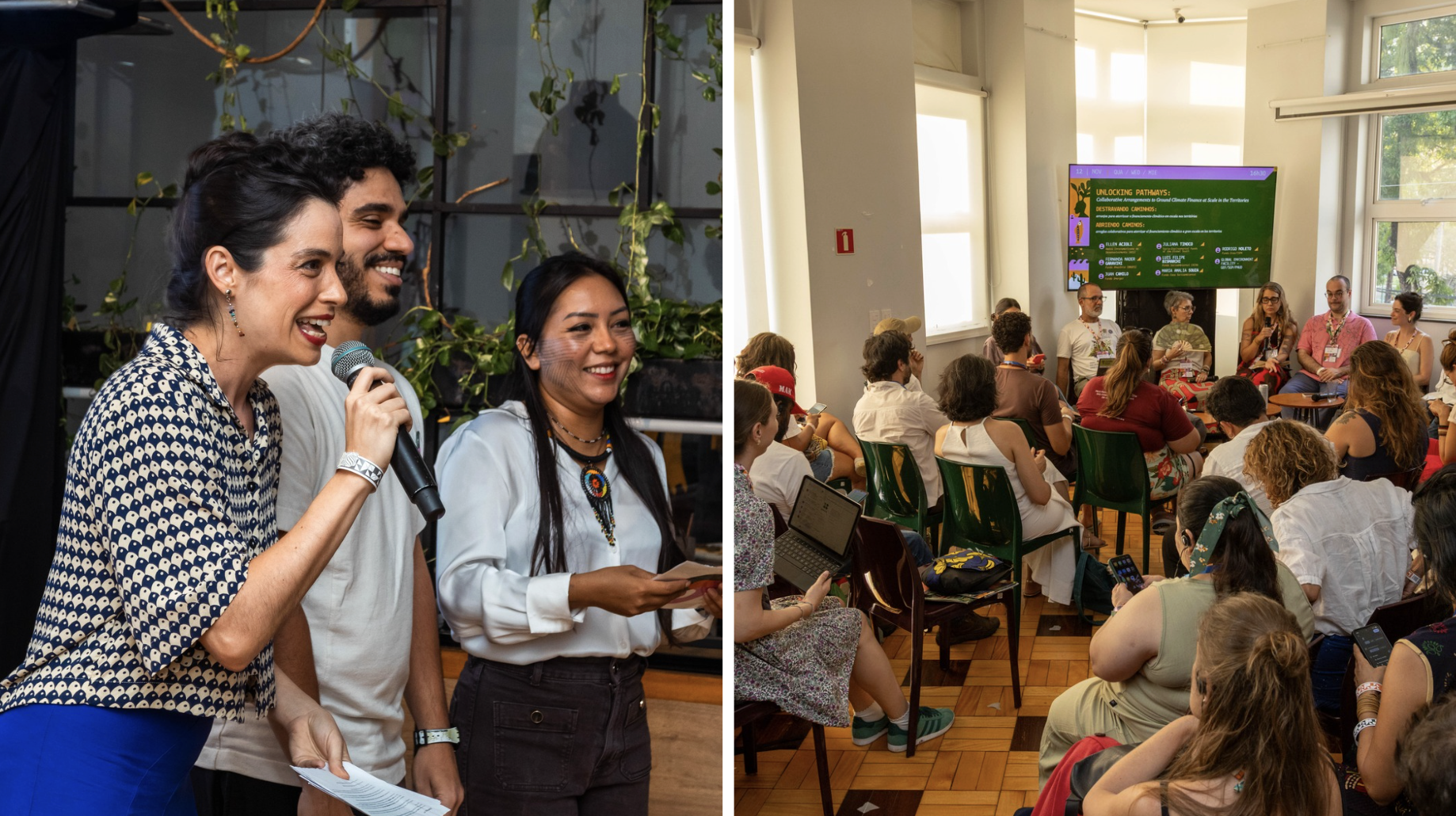


In a year marked by geopolitical volatility, shrinking civic space, and yet another round of multilateral promises, something different took root during the 30th United Nations Climate Change Conference in Belém.
The Global South House, envisioned by Alianza Socioambiental Fondos del Sur (Socio-environmental Funds of the Global South) and brought to life through a deep partnership with Rede Comuá, The Amazon Community Funds Network, and the #ShiftThePower movement, was more than a venue. It was an architecture of collaboration: a place where networks, communities, and funders from the Global South can act not as invitees to the global debate – but as their hosts.
Across seven days, 20 panels, and 109 speakers from 84 organizations, the first edition of The Global South House, held during COP30, alongside dozens of other civil society spaces and the official conference zones, demonstrated what is possible when political imagination is shared and infrastructure is collectively built.
Amid intense competition for attention and audience, the final numbers were striking. More than 1,200 people moved through its rooms and over 500 organizations were represented among the participants. The physical “South House” also took shape in the digital sphere, generating nearly 380,000 impressions across online platforms and making more than 350 hours of trilingual programming permanently available.
Yet its real success cannot be measured only in numbers. It lies in the way the South House rearranged relationships, shifted the center of gravity, and made visible the power of networks that rarely receive institutional recognition.
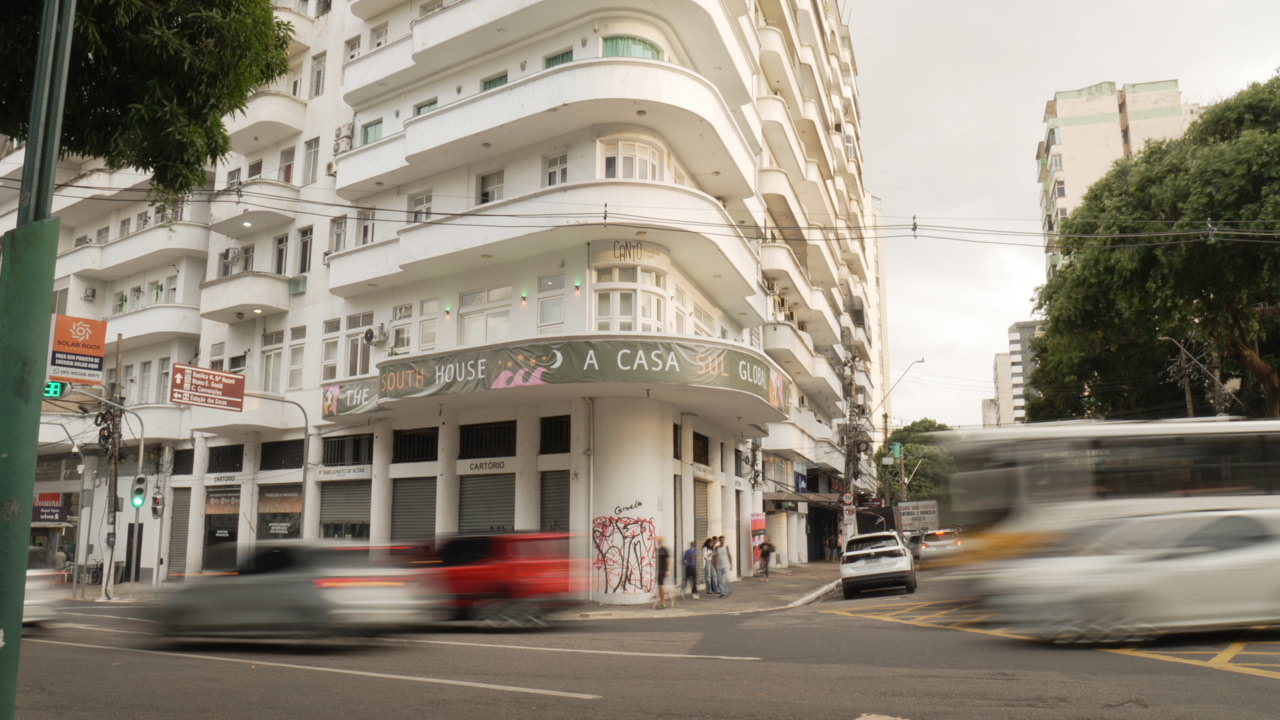
A house built by many hands
The Global South House was a collective construction, the result of networks combining their legitimacy, knowledge, and political intentionality. Alianza and Comuá, networks whose members fund and accompany thousands of grassroots initiatives, worked side by side with Indigenous, feminist, youth, and territorial funds to co-create the manifesto and the political framing of the space.
This collaborative architecture made the South House credible. As Beatrice Makwenda (TrustAfrica) reflected, it was "a living, breathing space" where people could "meet, challenge each other, and build shared purpose." It shifted power not through slogans but through practice: "Voices too often sidelined were brought to the centre… The Global South House also showed the quiet strength of networks. When activists, funders, researchers, and community leaders find each other and speak openly, something changes. Trust grows. Imagination expands. And the work moves from individual projects to collective momentum."
The South House also embodied the political force of networks. In the words of Fundo Baobá para Equidade Racial, it reaffirmed "the power of territories, cultures, and the solutions that are born in the Global South." This was not a metaphor. It was visible in every exchange, in how Indigenous leaders challenged global financing logics, how youth movements reframed climate governance, how community funds described what accountability looks like when it starts in the territory, not in donor offices.
When networks transform the debate
Across conversations, a shared understanding emerged: networks are not peripheral actors. They are political infrastructures capable of shifting how power and resources move.
They connect struggles across borders; resist extractive pressures; protect civic space; and create new mechanisms – from Indigenous and Quilombola (afro-descendent communities) funds to regional alliances and participatory governance models – that make financing accessible, culturally grounded, and accountable to communities.
Speakers from Africa, Latin America, and Southeast Asia described how their networks align local, national, and continental agendas; how they mobilize resources collectively; and how they craft responses to structural issues governments and traditional philanthropy rarely confront. Trust, horizontality, complementarity between small and large organizations, and long-term collaboration were repeatedly cited not as aspirations but as methods of survival in contexts of repression, violence, and rapid climate change.
A counter-architecture inside COP30
The Global South House treated collaboration as a form of power and made visible what many in Belém already know: a financing architecture built without the Global South cannot claim legitimacy. People left the House changed not because of polished reports or announcements, but because they experienced a different way of doing political work.
As Le Anh Nguyen Long (Samdhana Institute) wrote, "this was perhaps the most vibrant space in the city [Belém]. Anyone who came to The Global South House for a talk, for a meeting, for an interview, for research, to rest, to teach, to learn, for a connection, for all of that and so much more walked away having lived the lyrics of that Marvin Gaye and Tammi Terrell song: "Aint nothing like the real thing, Baby."
The collaboration across geographies, movements, and political traditions was not incidental; it was the message. By convening actors who rarely share the same room, the House demonstrated the scale of what is possible when local leaders, community funds, Indigenous organizations, youth movements, and regional networks collectively shape the agenda.
Rather than ending here, this marks the beginning of a broader political project. The House now moves forward seeking new forums, alliances, and formats to deepen the debates that emerged in Belém. Its very existence – and the power it mobilized – is a testament to the urgency of listening to communities on the frontlines and redirecting financial flows toward their leadership. What the Global South House achieved in seven days is only a preview of the conversations, strategies, and collaborations still to come.
Paula Tanscheit is the Communications Manager at Alianza Socioambiental Fondos del Sur


