


This story is part of a series supported through a partnership with Global Fund For Children.
“I have absolutely no faith that any expert, no matter how qualified they are, sitting in New York, or London, or Rome, could solve for a woman who has lost her husband, two of her children, and her basic means of livelihood in a community somewhere in Africa. “
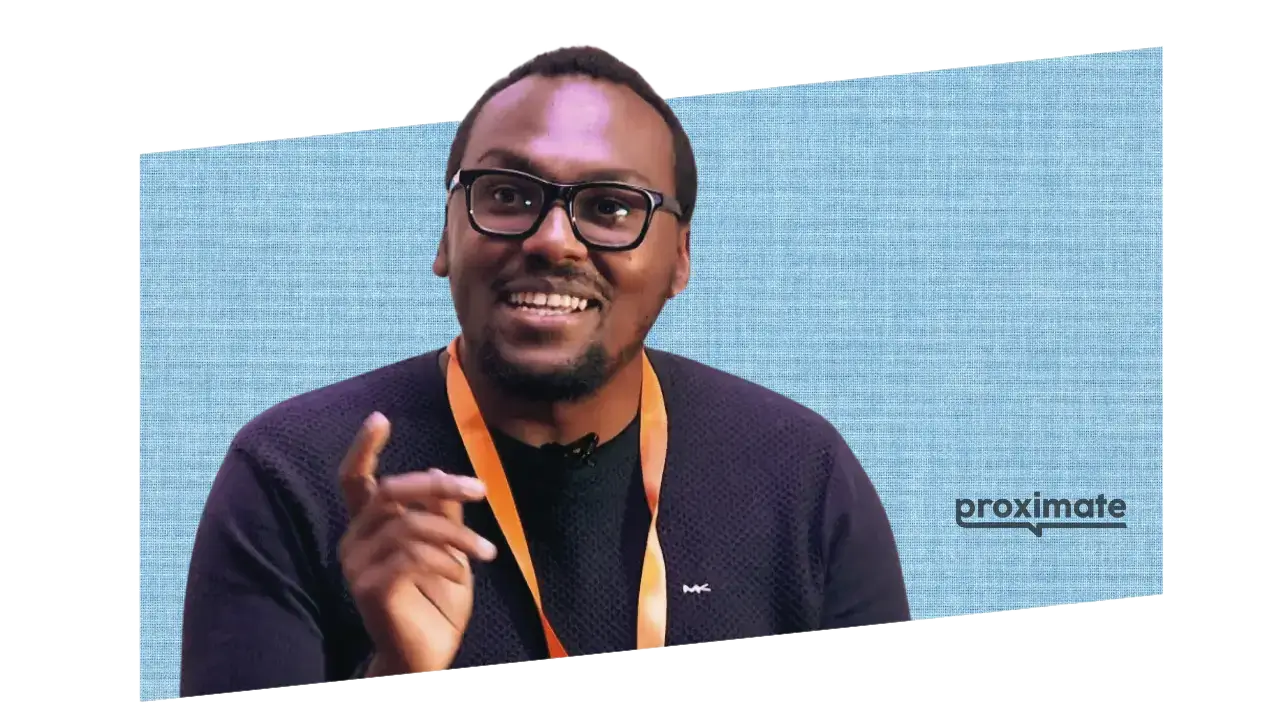
That line has stayed with me for days now. It came from Khalid Ali, Managing Director of the Proximate Fund Sudan. This was in the middle of a follow-up interview that turned into one of the most honest conversations I have had about aid in a long time.
He said it straightforwardly, almost ‘matter-of-factly’, the way you would state something that is obviously known, but nobody says out loud in funder rooms. Maybe that is the whole point. Everybody in this sector knows it, but very few of our systems are built as if we believe it.
I had been in Addis Ababa the week before, for the 10th East Africa Philanthropy Conference, a gathering that felt less like a conference and more like a continent talking to itself in the mirror.
Over four days and five hundred delegates, the theme that kept emerging, in plenaries, in Masterclasses, in Workstreams, in Keynotes, was simple: we are awake. Awake to the fact that the aid era, as we’ve known it, is shrinking. Awake to the fact that Africa has never lacked capital, generosity, or ideas, but only the architecture to count, connect, and enable them.
By the end of it, one line from the conference had lodged itself in my notes: Africa is no longer waiting for a seat at the table; the table is ours, the resources are ours, and the future is ours to build. It’s a big claim. Right? The question the East African Philanthropy Conference kept circling, session after session, was whether anyone is actually building the table, or whether we are still just describing it.
After the conference, I was able to catch up with Khalid to dive deeper into what Proximate Fund Sudan is doing to make that claim something more than a conference soundbite.
Proximate Fund Sudan is the first country rollout of a pan-African pilot hosted by Adeso, a Nairobi-based organisation that, in Khalid's words, has spent the better part of a decade deliberately choosing not to reinvent itself but to incubate the next generation of institutions. The fund itself is pooled and unrestricted, drawing from philanthropy rather than bilateral or multilateral sources, precisely because philanthropic capital, unlike most government aid, tends to come without a mandate attached.
I asked him what problem he believed couldn't simply be solved by improving the existing funding system. His answer was blunt: the traditional post-World War II humanitarian architecture is top-down by design, and no amount of consultation fixes a structure that was never built to hand over decision-making in the first place. So Proximate has decided to invert it. No programming team sitting in Nairobi deciding what Darfur needs. No M&E department writing indicators before anyone has asked the community what its priorities are. Instead, the fund tries to strip out the intermediary layers entirely and let the community identify its own problems and its own solutions.
What struck me most was how he talked about trust, because it's a word this sector throws around constantly without ever defining it. For Khalid, trust isn't a values statement; it's a due diligence method. Instead of vetting an organisation through five years of audited accounts or a risk framework built in a Western capital, Proximate vets through the community itself: has this group actually delivered before, are they in good standing with the people they claim to serve, would the community vouch for them. That sometimes means working through structures a traditional donor wouldn't recognise as legitimate at all: a community leader, an imam, a group of neighbourhood volunteers running a makeshift school out of a displacement camp. He was honest that this is one of the hardest things to explain to Western funders, who often can't fit "the chief told us to do this" into their own governance vocabulary, even when that chief's word is the only currency that actually moves things forward on the ground.
Then there was the infrastructure point, which is really the thesis of the whole fund. Every donor conversation about localisation eventually arrives at the same excuse: there aren't enough capable local actors to absorb the money. Khalid answers that the actors exist; what's missing is the infrastructure to reach them, vet them lightly, and move resources at scale without smothering them in the same bureaucracy the fund exists to avoid. He put it simply: we are the infrastructure.
Not a fund in the investment sense so much as a platform sitting between givers and communities, built to prove that the "hard to reach" label often just means nobody with proximity has tried.
It's worth putting that conversation back alongside something Evans Okinyi said on the opening morning in Addis Ababa, because the two conversations were, without either of them knowing it, answering each other. Okinyi opened the conference by asking delegates a question that nobody wanted to sit with: if external funders disappeared tomorrow, would our ambitions survive?
Would our institutions? Our dreams? For most of us in that room, the honest answer was no, and Okinyi's point was that the discomfort of that answer is exactly where the real work starts. Philanthropy, he argued, has to stop managing poverty and start becoming an architecture of change. Listening back to Khalid days later, I kept thinking that Proximate Fund Sudan is one of the few concrete attempts I've seen at building the thing Okinyi was describing in the abstract, an institution designed from the ground up to survive without the traditional donor mandate sitting on top of it.
This is the first of a few columns I'll be publishing over the coming weeks, drawn from conversations I had coming out of the East Africa Philanthropy Conference. Each one picks up a different thread of the same question the conference kept asking: not whether Africa has what it needs to build its own architecture of change, but who is actually doing it, and what it looks like in practice.


